The unique, deeply protective relationship between the moviegoers of Kerala and Telugu superstar Allu Arjun has officially scaled a historic new milestone, proving that the actor’s cultural footprint in the state remains entirely timeless. Decades after local fans affectionately rechristened him as “Mallu Arjun” to celebrate his infectious screen energy, the 4K Ultra Impact remaster of his 2006 romantic action-comedy classic Happy hit theaters on June 12, 2026. What was initially anticipated by trade analysts to be a modest nostalgia screening quickly transformed into an absolute box office rampage, as the Malayalam dubbed version—Happy Be Happy—shattered historical tracking parameters to secure a spectacular 30 lakhs plus opening day collection in Kerala.
This phenomenal metric marks a watershed moment for modern distribution tracking, as the film officially claims the title for the biggest re-release opening day for any non-Mohanlal film, as well as the highest opening day for a dubbed Telugu re-release in Kerala history. Within the all-time regional re-release charts, Allu Arjun’s 20-year-old classic has successfully locked itself into elite company, positioned tightly behind legendary home-grown blockbusters including Devadoothan (35 lakhs), Chotta Mumbai (37 lakhs), Manichitrathazhu (50 lakhs), Ravanaprabhu (70 lakhs), and the unassailable record-holder Spadikam (88 lakhs). The historic Day 1 turnout underscores the reality that while contemporary stars routinely navigate complex promotional campaigns to capture the Mollywood market, Allu Arjun’s vintage catalog retains an organic, unshakable emotional monopoly over local youth demographics.

Pandemonium in Savitha: A Gen-Z Pilgrimage to 2006 Nostalgia
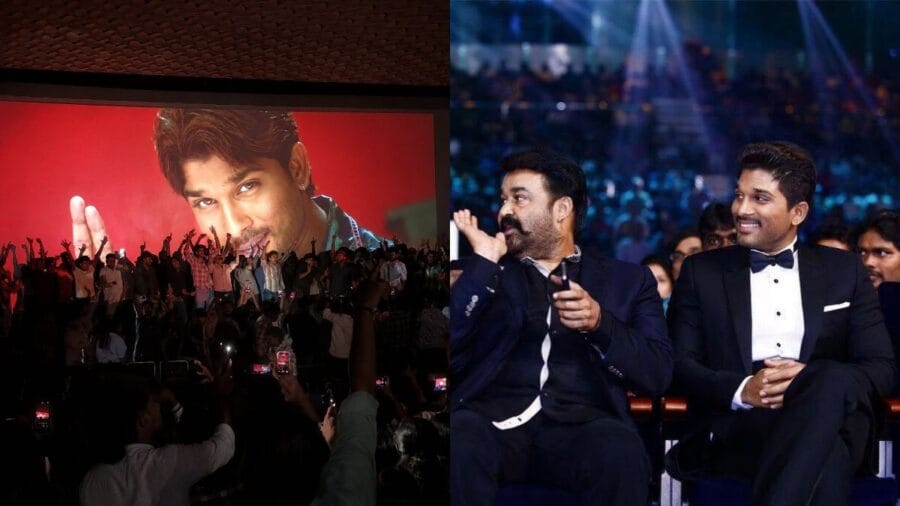
The epicenter of this statewide theatrical carnival unspooled inside Ernakulam’s iconic Savitha Theater complex, which witnessed massive fan gatherings, large-scale poster decorations, and continuous drum ensembles hours before the first morning show commenced. Digital tracking networks and social media platforms were instantly flooded with viral mobile footage captured inside packed screening halls, displaying hundreds of fans jumping onto platforms, dancing in synchronization with the musical tracks, and reciting iconic Malayalam dialogue dubs in perfect unison. Theater owners noted that the atmosphere closely mirrored the high-octane celebration of a premier festival release, forcing chains to instantly allocate late-night additional shows across central districts to accommodate the sudden, massive overflow of crowd traffic.
The extraordinary theatrical response represents a major validation for the technical overhaul executed on the original print. Distributed under a specialized strategy by regional media handlers, Happy Be Happy was deployed across premium single screens and multiplexes utilizing state-of-the-art 4K Dolby Atmos and 4K DTS multi-channel audio configurations. Initially slated to debut on April 8 to coincide perfectly with the superstar’s birthday before navigating minor processing delays, the prolonged wait only served to amplify fan anticipation. The polished presentation successfully preserved the vivid, bright colors and crisp audio frequencies of the early 2000s, transforming a routine retrospective into a premium, mandatory large-format theatrical experience for modern audiences.

Subverting the Traditional Marriage Formula via Yuvan’s Viral Beats
Originally helmed in 2006 by director A. Karunakaran and mounted on a comfortable budget by producer Allu Aravind under the premium Geetha Arts banner, Happy holds a highly unique structural space within Allu Arjun’s early filmography. Moving entirely away from the rigid factionalist formulas dominating Telugu cinema at the time, the screenplay crafted a refreshing, highly engaging urban comedy. The narrative tracks Bunny, a hyper-energetic pizza delivery boy, and Madhumati, a fiercely studious girl portrayed with brilliant comedic timing by Genelia D’Souza, who are forced by an absurd twist of fate and family pressure into a secret, highly volatile contractual marriage while living under the same roof. The film also features a stellar, highly praised supporting turn from Manoj Bajpayee as a strict, hot-tempered police official who unwittingly drives the central couple’s chaotic dynamic forward.
When the Malayalam dubbed version originally made its landing in Kerala back in 2006, it triggered an absolute cultural phenomenon, running successfully across major centers for over 175 days and permanently establishing Allu Arjun as a household name in the state. A massive variable behind this historic crossover success was the iconic, multi-platinum musical soundtrack masterminded by composer Yuvan Shankar Raja. Chartbusters became generation-defining anthems that dominated regional college festivals and mobile ringtones for a decade. As distribution networks look to expand screen counts across North Malabar to sustain the film’s incredible box office momentum over the weekend, the historic triumph of Happy Be Happy firmly establishes that in the kingdom of Kerala cinema, the craze for Bunny remains an unalterable force of nature.


Leave a Reply