

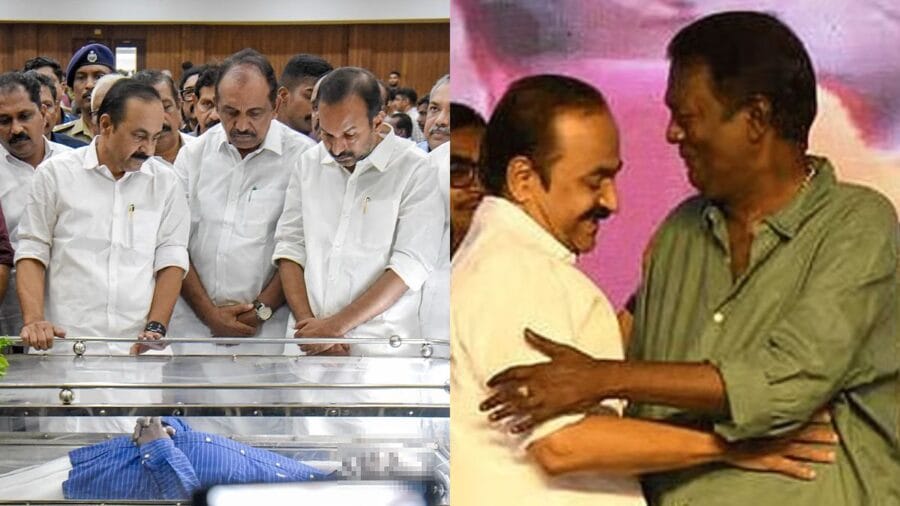
Malayalam cinema is mourning the loss of Salim Kumar, the National Award-winning actor, writer and satirist, who died after a long illness. On June 15, the people of Ernakulam gathered for a public memorial in his home town of Paravoor, where Chief Minister V.D. Satheesan inaugurated the proceedings.
Satheesan struggled to hold back tears as he spoke. He embraced Salim Kumar’s wife, Sunitha, and their sons, Chandu and Aromal, and told the gathering that the loss felt less like the death of a colleague and more like losing a brother.
The comedian who stayed with audiences
Much of Satheesan’s address dwelt on what made Salim Kumar’s comedy last. His humour, the Chief Minister said, didn’t end when the film did — his timing, his voice and his expressions stayed with families long after they left the theatre. He pointed to how that humour has found new life online, where a large share of today’s regional memes still lean on Salim Kumar’s face.
He recalled some of the actor’s defining roles: Pyasi in Kalyanaraman (2002), Advocate Mukundan Unni, and Dance Master Vikram in Pulival Kalyanam (2003). Through these characters, Satheesan said, Salim Kumar turned everyday frustrations and small defeats into something audiences in ordinary households could laugh at and recognise.
Proving his range with ‘Adaminte Makan Abu’
For all his reputation in comedy, Salim Kumar’s dramatic ability was just as real. The turning point came in 2011, when director Salim Ahmed cast him against type in Adaminte Makan Abu (Abu, Son of Adam). He played a poor, elderly perfume seller saving slowly for a lifelong dream of making the pilgrimage to Mecca — a quiet, restrained performance that won him the National Film Award for Best Actor.
Satheesan, with Salim Ahmed present on stage, said the award belonged not only to the actor’s family but to the working-class community of Paravoor. He praised the actor’s discipline across theatre, film and public life.
A committed voice
Salim Kumar was also known for his politics. From his student-leader days he held firm to his convictions, and unlike many in the industry who stay quiet to protect their careers, he spoke his mind openly — regardless of whether it cost him roles or endorsements.
Satheesan closed with a private memory. At a civic reception in Paravoor after his oath-taking as Chief Minister, a frail Salim Kumar — who had quietly battled serious illness for over a decade — took his hand and told him everything now felt complete. He recalled weeping in 2011 when political circumstances had denied Satheesan a cabinet post, and said that living to see him become Chief Minister had fulfilled his life’s purpose.
At the time, Satheesan said, he brushed the words aside and promised they had years of work ahead. Only after the news of Salim Kumar’s death did he understand what that conversation had been — a quiet goodbye. He ended by inaugurating a state memorial foundation in the actor’s name.



Leave a Reply