
Kollywood

Madras High Court Orders Sun TV to Pay ₹10 Lakh to Actress Sukanya Over Defamatory Veerappan Interview

· 3 min read · No comments

A grueling legal battle spanning three decades has finally drawn to a decisive close, marking a monumental victory for personal dignity and media accountability in Indian broadcasting. The Madras High Court has officially upheld a trial court decree ordering regional broadcasting giant Sun TV Network Limited to pay 1000500 rupees in damages to veteran South Indian actress R. Sukanya. The landmark verdict, delivered by Justice K. Kumaresh Babu, firmly dismissed an appeal filed by the television network against a 2015 city civil court judgment, concluding that the channel displayed clear commercial malice by intentionally broadcasting highly scandalous, unverified allegations made by the notorious forest brigand Veerappan during a controversial 1996 television program.

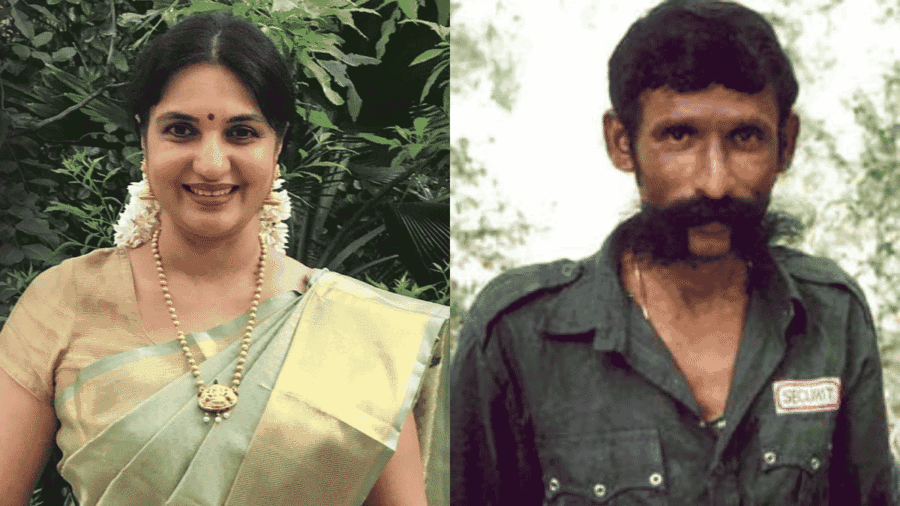
The legal dispute traces its origins back to April 17, 1996, when Sun TV aired a highly publicized episode of its investigative show Nerukku Ner (Face to Face). The program featured an exclusive, multi-part interview with Veerappan, conducted deep within the Sathyamangalam forests by investigative journalist and Nakkheeran editor R.R. Gopal. During the broadcast, the forest bandit leveled malicious, fabricated statements against Sukanya, falsely linking her to a relative of a prominent national political leader and claiming the alleged relationship was utilized as political leverage ahead of the 1996 general elections. The popular actress, who was at the peak of her cinematic career following the historic success of Kamal Haasan’s blockbuster Indian, immediately challenged the network, asserting that the unchecked broadcast caused irreparable harm to her social standing, professional prospects, and family peace.

Portrait of actress Sukanya smiling warmly, wearing a red-and-black checkered saree, gold jewelry, a bindi, and a nose ring, posing indoors in front of warm-colored curtains with one hand raised near her chin

Court Rejects Broadcaster’s Disclaimer Defense and Proof of Malice

Throughout the prolonged litigation, Sun TV sought to evade corporate liability by arguing that it functioned merely as a neutral broadcasting platform for independent footage produced by a third party. The television network contended that it bore no direct animosity toward the actress and highlighted that a prominent on-screen disclaimer was displayed at the beginning of the program, explicitly informing viewers that the opinions expressed were solely those of Veerappan and that the channel held no responsibility for their historical accuracy. Furthermore, the network argued that the contentious segment was never re-telecast following the initial legal notice and that an official expression of regret had already been published in a regional print publication to resolve the controversy.

However, the Madras High Court completely rejected the broadcaster’s line of defense, noting that Sun TV maintained absolute, unrestricted editorial and modification rights under its formal screening agreement with Gopal. Justice Kumaresh Babu observed that because the network held the explicit authority to edit, cut, or delete any portion of the tape prior to transmission, it was fully aware of the highly sensitive nature of the content but consciously chose to retain the scandalous allegations to generate commercial viewership and advertising revenue. The bench also held that issuing an expression of regret inside a third-party Tamil magazine, rather than broadcasting a correction on the identical television channel where the defamation originally occurred, served as definitive proof of corporate malice, as it intentionally failed to reach the original viewing audience.

Close-up of poacher Veerappan with a thick mustache, bare-shouldered with a rifle slung over his shoulder, staring directly at the camera against a blurred outdoor background of trees

A Defining Precedent for Media Responsibility and Content Verification

The High Court’s final ruling has established an important judicial precedent regarding the structural responsibilities imposed on broadcasting houses before releasing investigative content into the public domain. The judge noted that Sun TV failed to exercise even rudimentary diligence or caution, making no attempt to seek a counter-clarification from Sukanya or initiate an external cross-check of Veerappan’s narrative before distributing it globally. The court firmly dismissed the network’s final technical argument that the plaintiff had failed to mathematically quantify her loss of reputation, ruling that an immediate decline in public image naturally follows the publication of such sensationalist material against a well-known public figure.

As the legal fraternity welcomes the closure of this 30-year-old case, the judgment is being widely discussed across media monitoring circles as a necessary warning to modern streaming platforms and satellite channels. In an era increasingly driven by rapid digital output, the ruling underscores that a generic on-screen disclaimer cannot insulate a media corporation from legal liability if it fails to vet its output. Sukanya’s perseverance through decades of appellate delays stands as an inspiring narrative of resilience for artists navigating corporate overreach.

Leave a Reply

Your email address will not be published. Required fields are marked *