Kollywood

Director and Actor Bharathiraja Passes Away in Chennai at 84; Last Acted in Mohanlal’s ‘Thudarum’

· 5 min read · No comments

A profound, sorrowful silence has enveloped the Indian film industry as the definitive curtain falls on a golden era of cinematic storytelling. Veteran filmmaker, screenwriter, and actor P. Bharathiraja, a towering titan of Indian cinema who shattered the shackles of studio-bound filmmaking to inject raw, rural realism into commercial screenplays, passed away early Wednesday morning on June 10, 2026. The 84-year-old visionary breathed his last at his residence in Neelankarai, Chennai, following a prolonged battle with age-related health issues and recurring respiratory complications. Family associates noted that his physical decline was heavily accelerated by severe emotional trauma following the tragic demise of his son, actor-director Manoj Bharathiraja, due to a cardiac arrest in March 2025.

Affectionately revered throughout the country as Iyakkunar Imayam—the Everest of Directors—Bharathiraja’s departure has triggered a massive wave of grief across artistic and political circles. For generations of filmgoers, his booming, emotive voice introducing his projects with the iconic phrase, “Yen Iniya Tamil Makkale” (My sweet Tamil people), was much more than a routine title-card ritual; it was a personal invitation from a master craftsman who viewed cinema as a grounded conversation with the soil. Over a prolific career spanning nearly five decades, he helmed more than 40 feature films, redefining the visual and cultural grammar of South Indian cinema by proving that the red earth, local festivals, and complex caste dynamics of the countryside were inherently cinematic.

Taking the Camera to the Fields: The 1970s Radical Wave

Before Bharathiraja’s explosive arrival, the imagination of Tamil cinema was strictly urban-centric and confined to the artificial sets of Madras studios. Heroes wore heavy cosmetics and Western suits, heroines conformed to fair-skinned ideals, and songs were performed against brightly painted indoor backdrops. Born Chinnasamy Periyamaya Thevar on July 17, 1941, in Theni Allinagaram, Bharathiraja grew up observing the authentic, unvarnished pulse of rural Tamil Nadu. After working briefly as a health inspector and struggling through odd jobs in Chennai, his perseverance led him to secure his legendary directorial break in 1977 with the landmark feature 16 Vayathinile.

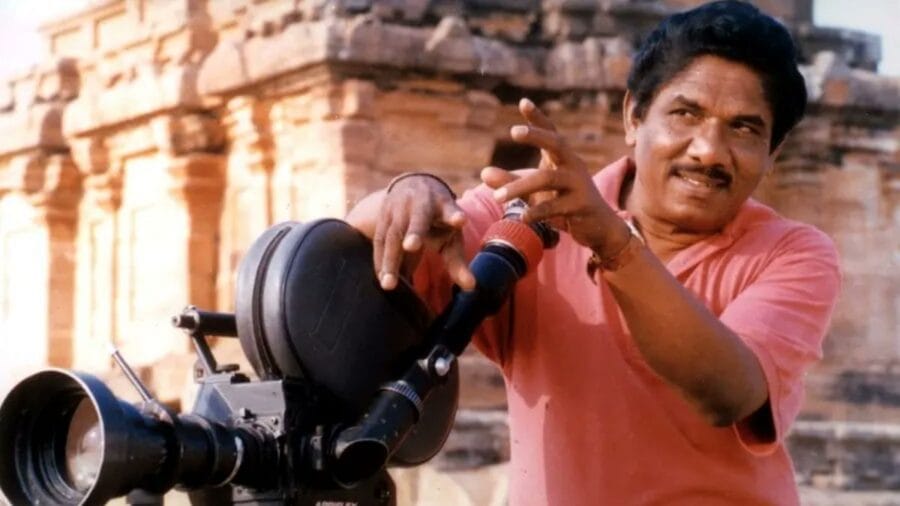
bharathiraja director

The film made history by packing up the studio lights and stepping directly into live village locations. Presenting a cast of rising stars including Kamal Haasan, Rajinikanth, and a teenage Sridevi, 16 Vayathinile captured village life with striking, flesh-and-blood realism. The film’s characters—Mayilu, Chappani, and Parattai—became permanent cultural touchstones. Written off by contemporary media as a failed experimental project, the movie ran for 175 days, establishing the rural village film as a dominant commercial genre. Together with musical maestro Ilaiyaraaja, with whom he shared a deep personal friendship dating back to his pre-cinema days in Theni, Bharathiraja forged a brilliant sonic and visual language that drew directly from folk rhythms and the authentic heartbeat of the countryside.

Unparalleled Versatility and the Ultimate Star-Maker

While celebrated for his rural masterpieces, Bharathiraja possessed an exceptional, chameleonic stylistic range. He routinely broke his own structural mold to explore daring, dark urban narratives. In 1978, his second release Sigappu Rojakkal explored what was then an unthinkable, pioneering theme—a sophisticated psychological thriller tracking a psychopathic serial killer driven by extreme misogyny, anchored by a chilling performance from Kamal Haasan. He delivered slick action with the investigative thriller Tik Tik Tik, captured profound inter-generational romance in Niram Maaratha Pookkal, and crafted subtle, haunting romantic dramas like Nizhalgal and Kadalora Kavithaigal.

The filmmaker was also fiercely committed to using his art as a vehicle for sharp social commentary. His 1978 drama Kizhakke Pogum Rail subtly exposed caste oppression and the systemic marginalization of women, while his critical hit Vedam Puthithu boldly tackled the deeply entrenched Brahminical hegemony and rigid caste hierarchies of Tamil society. His 1985 masterpiece Muthal Mariyathai offered thespian Sivaji Ganesan a career-defining role, trading his signature theatrical style for a restrained, masterfully quiet dramatic performance that explored a complex, platonic love affair inspired by the life of Russian author Fyodor Dostoevsky.

Beyond his technical prowess, Bharathiraja functioned as the industry’s ultimate star-maker. He possessed an uncanny, legendary eye for raw talent and systematically launched a generation of icons who would shape the future of Indian cinema. In a highly unique, superstitious tradition, he frequently rechristened his lead actresses with fresh professional names beginning with the letter “R”. Through this unique grooming academy, he gifted cinema with extraordinary talents like Radikaa, Revathi, Radha, Rekha, and Ranjitha, while also launching prominent male actors like Karthik, Pandian, and Napoleon. His films also served as a vital training ground for his directorial associates, including hitmakers K. Bhagyaraj and Manivannan, and marked the formal debut of legendary lyricist Vairamuthu.

A Powerful Transition to Acting and a Triumphant Final Onscreen Ride

In the latter half of his illustrious career, Bharathiraja successfully stepped in front of the lens, reinventing himself as a formidable, highly sought-after character actor. His distinct dialogue delivery and commanding screen presence endeared him to entirely fresh generations of filmgoers. He delivered unforgettable performances in Mani Ratnam’s Aayutha Ezhuthu and the Dhanush-starrer Thiruchitrambalam. In recent years, he continued to display his immense acting range in Nithilan Saminathan’s blockbuster thriller Maharaja and director Tharun Moorthy’s highly praised Malayalam feature Thudarum, where he shared screen space alongside superstars Mohanlal and Shobana. As a director, his final creative statement was a beautifully crafted, critically acclaimed segment titled Paravai Kootil Vaazhum Maangal in Amazon Prime Video’s 2023 anthology Modern Love Chennai.

The Government of India formally recognized his monumental, permanent contributions to national art by conferring upon him the Padma Shri, the nation’s fourth-highest civilian honor, in 2004. His staggering competitive trophy cabinet also included six National Film Awards, four Filmfare Awards South, and six Tamil Nadu State Film Awards. Beyond the world of scripts, he remained a fiercely passionate socio-political voice, famously mobilizing the film fraternity under the Tamilar Kalai Ilakkiya Panpadu Maiyam to advocate for regional welfare and lead public protests for the constitution of the Cauvery Management Board.

As news of his passing spread across the country, a profound wave of respect and mourning swept through social media and regional administrative units. Icons across industries have expressed their deep condolences, acknowledging that every modern director who points a camera at a sunlit field or a rustic village square owes a debt to Bharathiraja’s original courage. The veteran filmmaker is survived by his wife, Chandraleela, whom he married in 1974, and his daughter Janani. The family is expected to announce the final schedule and formal state funeral arrangements in Chennai later today.

Leave a Reply

Your email address will not be published. Required fields are marked *